
Toward SDG 6 in the Deduru Oya Basin, Sri Lanka: Assessing Localized Progress in Rural and Urban Settings
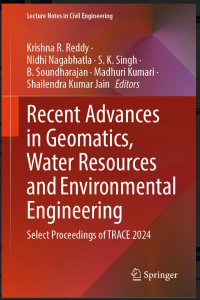
UNU-CRIS contributes to research on Sri Lanka's SDG 6 Progress: Deduru Oya Basin as a reference for Island Nation Water Security Standard
"Toward SDG 6 in the Deduru Oya Basin, Sri Lanka: Assessing Localized Progress in Rural and Urban Settings." The study exemplifies the mission of UNU-CRIS's Nature, Climate, and Health clusters to advance solutions for island nations facing freshwater scarcity amid climate volatility.
The research reveals critical disparities: rural communities struggle to achieve access to safe drinking water, while urban hubs struggle to manage wastewater treatment effectively. Solutions like community-led micro-irrigation, which boosts crop yields by 25%, and urban rainwater harvesting, which reduces reservoir dependency by 20%, are explained for their scalability.
"The Deduru Oya model demonstrates rural-urban synergies securing water access by 2030 through integrated governance, nature-based filtration (solutions), and digital monitoring," reflects Nidhi Nagabhatla, co-author of the chapter and editor of the book (https://link.springer.com/book/10.1007/978-981-95-0736-8) where it is published. Localized SDG 6 demands integrated approaches," Dr. Nagabhatla emphasizes. "Our work bridges science-policy gaps for sustainable water futures."
For Sri Lanka and fellow island states, we advocate scalable solutions: nature-based infrastructure and community empowerment.
----------
Water is essential for society, the environment, and the economy. Achieving the Sustainable Development Goal 6 (SDG 6) targets is therefore critical for community, regional, and national development. The successful implementation of SDG 6 is underpinned by key pillars, including governance, finance, capacity development, and monitoring, which collectively form an effective operational framework. Good governance is a fundamental pillar of SDG 6. It comprises essential components such as policy formulation, legal framework development, strategic planning, coordination, funding, capacity building, data acquisition, monitoring, and regulation. This chapter highlighted the importance of water security as a key element of the sustainability agenda related to SDG 6. Localized challenges are often overlooked in national progress assessments for SDG 6, which can lead to ineffective development strategies. Access to water, as well as progress toward achieving the targets of SDG 6, differs across local contexts, even within the same watershed, due to various socioeconomic, climatic, environmental, and geographical factors. This chapter specifically focused on irrigation improvements and engineering innovations’ impact on enhancing water use efficiency within a quasi-cultural context. Therefore, this study assessed Sustainable Development Goal (SDG) indicators 6.1–6.4 in the Deduru Oya basin in Sri Lanka. This vulnerable basin has less than 20% of its population with access to safely managed drinking water and sustainable sanitation services. Nonpoint source pollution, caused by agricultural runoff and poor waste management, seriously threatens the region’s water sources, risking human health and ecosystem integrity. With their historical significance and adaptability to local conditions, Indigenous water management systems provide valuable insights for developing effective solutions. However, several challenges remain, including limited data availability and the complexities of integrating traditional practices with modern water management techniques. Moreover, significant issues regarding water use efficiency and sustainability are further exacerbated by climate change, which threatens the availability and quality of water resources. The “Use to Resource Ratio” indicates that over 40% of the basin’s water resources are currently overexploited. The analysis showed that water-related challenges in Sri Lanka are often localized, highlighting the necessity to address the needs of marginalized communities that are frequently neglected in water resource planning. This study proposed tailored solutions to achieve SDG 6 by 2030, advocating for integrating indigenous knowledge with modern water management practices. The proposed solutions focus on establishing robust monitoring systems, enhancing capacity building, and fostering active community engagement to ensure equitable access to water resources and to bolster resilience against climate impacts.